
What survives the crop in your Search ad image?
Three small image comparisons show what a crop keeps, what it loses, and when a different photograph would serve the offer better.

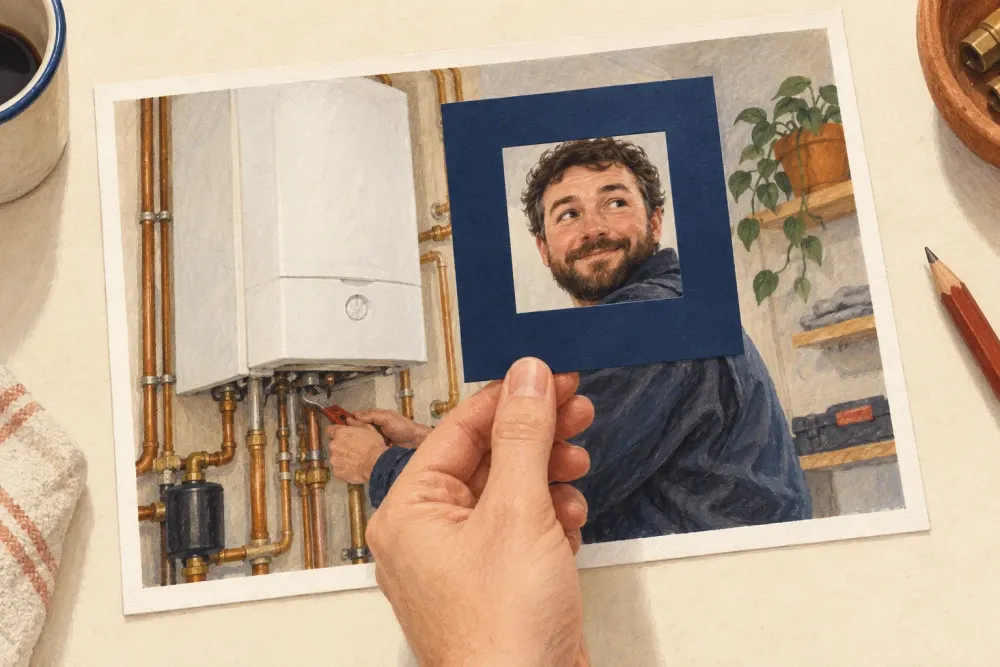
Before you look at the photograph they came from, compare these two squares. What service would you expect each one to advertise?

Both crops come from the same constructed photograph. A keeps the engineer’s face. B keeps the boiler and its copper pipework, with the engineer’s hand at the edge.
Beside “Boiler servicing”, B gives the words something specific to point to. A offers a person with a tool; the sliver of white casing at the left has to do a lot of work.
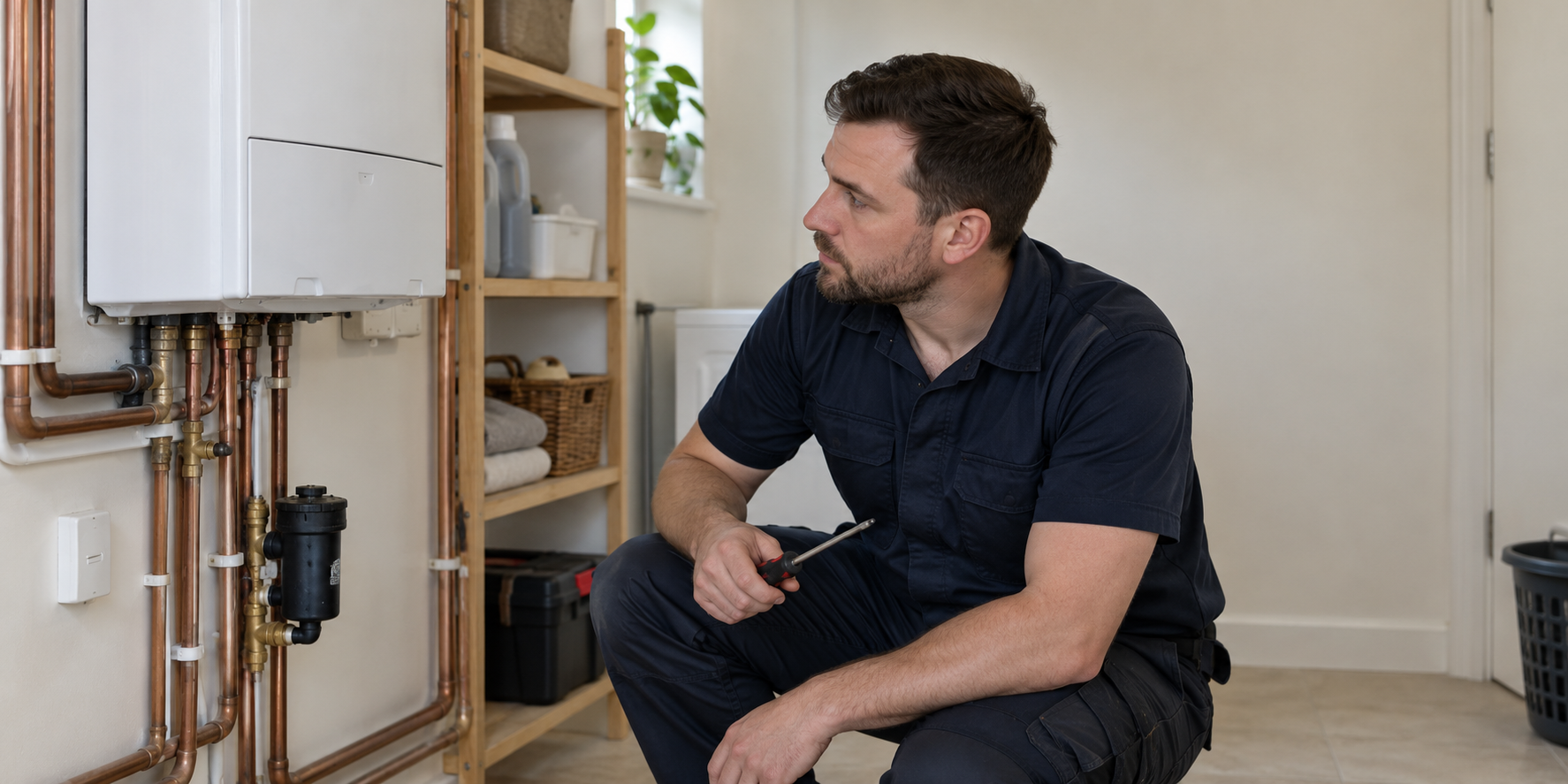
The centred crop, A, did not ruin the photograph. It changed the subject.
Now make both smaller.

The face still reads as a face. The boiler still reads as equipment, though its fittings become less distinct. B loses the portrait; A loses most of the reason for the portrait. That is the choice the crop makes.
The small squares in this essay are 112 pixels across, then 64. They are deliberately small viewing tests, not replicas of a particular Google placement. All three source photographs are constructed examples, not customer photographs or live ads; each comparison uses crops of its one original. The point is to inspect what remains recognisable, not to predict clicks.
A detail can survive without a close-up
Try the same comparison with a plant.

A keeps the plant and its pot. B brings one leaf forward. The pale-and-green pattern is already visible in A; this is not a rescue operation.
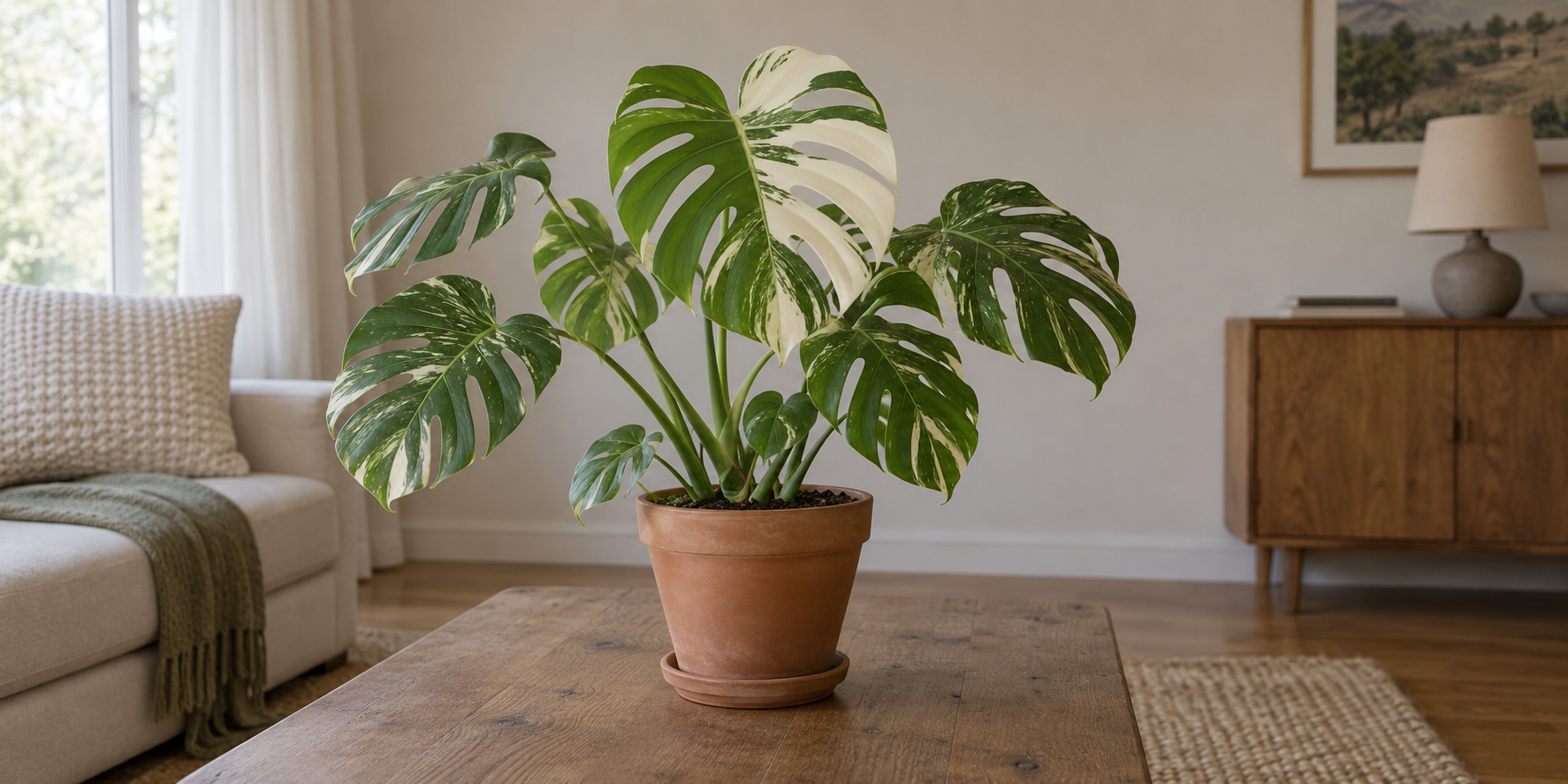
Beside “Variegated monstera”, B makes the leaf pattern unmistakable. But A also carries the pattern, plus an impression of the plant’s shape. If the offer is a whole plant, the pot and several leaves are useful information, not clutter to remove automatically.

Even at 64 pixels, A has not become an anonymous green blob. B buys more detail by spending the whole-plant view.
There is no universal prize for filling the square. Ask which part of the picture helps someone recognise the thing you actually sell. A tighter crop is useful when that part needs room. It can be wasteful when the wider crop already says enough.
A closer view can become a different offer
One more pair.

A shows a long table inside a room. B shows a place setting. Both look like dining; only one gives much evidence of a space for a group.
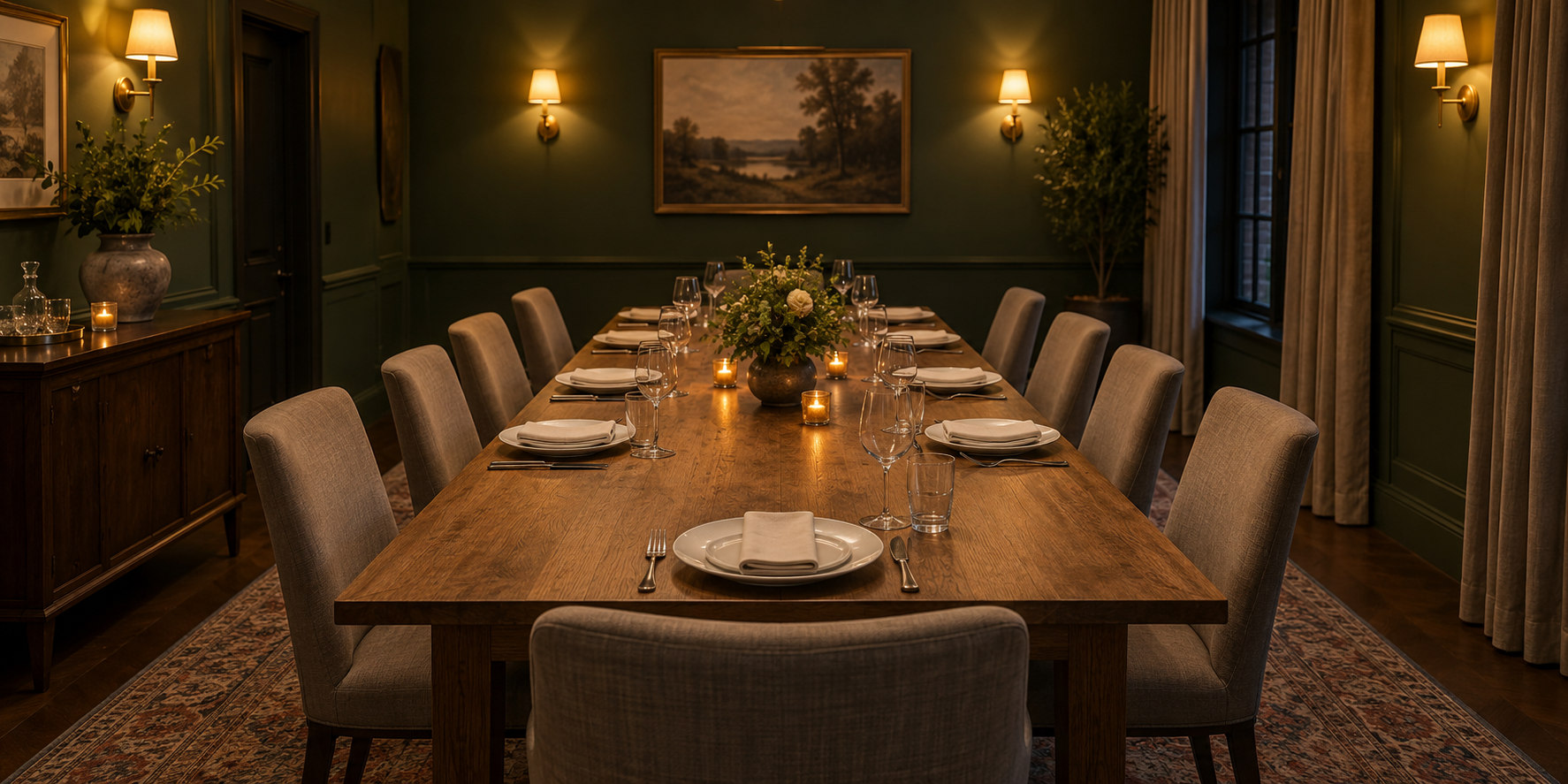
Beside “Private dining room”, A carries the relationship that matters: table, chairs, enclosed space. B keeps attractive plates and glassware, but removes most of that relationship.

The little room still has depth. The little place setting still has a plate. Enlarging the plate did not make the private room clearer.
For “Book dinner tonight”, neither picture shows the meal. A crop cannot supply a subject the photograph never contained. If the food is the reason to choose the restaurant, another photograph may be more useful than another pass through the crop tool.
Leave room for the right thing
Before choosing an image, put the intended words beside it, make the image small, and describe what you can still see. “A person with a tool” and “a boiler with pipework” are different answers. So are “a leaf” and “a whole plant,” or “a plate” and “a room for a group.”
Google’s current requirements call for a square image asset; a landscape version is optional and recommended. The recommended upload sizes are 1,200 × 1,200 and 1,200 × 628 pixels. Google recommends keeping important content within the centre 80% and offers cropping during image selection. Image formats can appear across mobile and desktop; you cannot choose which format serves in an auction. Google Ads image-asset guidance.
Google also excludes added text and graphics, blurry images, and crops that make the subject hard to distinguish. Keep the image relevant to the ad and landing page, and check the current requirements before uploading. Google’s image-asset requirements.
Those constraints guide file preparation. They do not decide whether the boiler, the face, the leaf or the room deserves the centre. A technically acceptable crop still needs a composition judgment.
If the useful answer disappears in the small version, try moving the crop. If every crop removes something essential, choose a different photograph. Then check the square and landscape versions separately: a successful wide composition has not earned the square’s approval.
These comparisons support judgments about what the pictures communicate. They provide no evidence that B will beat A on click-through rate or conversions. That requires performance evidence from the ads themselves.
The best crop is the one that leaves your offer in the picture.