
What did the price just rule out?
A bookshop study predicts that favorable price and rating disclosures can reduce purchases. The useful paid-search question is what makes the visit worth taking.

What did the price
just rule out?
A favorable price can make a book less worth inspecting. The useful lesson for paid search is about what a visit still promises.

Put the price in the ad. Let the people who would never pay it leave before you pay for their click.
There is real economy in that advice. But the shopper is making two decisions: whether to investigate this product, and whether to buy it. The price can end the investigation before they discover what might make the purchase worthwhile.
An August 2026 working paper by Jean-Pierre Dubé, Ilya Morozov, Franklin She and Anna Tuchman makes that distinction uncomfortable. Consider this hypothetical book in their fitted model:
| Price | Rating | |
|---|---|---|
| What attentive shoppers expect when the ad reveals neither | $4.80 | 4.23 |
| What the book actually offers | $4.50 | 4.4 |
Cheaper. Better rated. Yet the model predicts more purchases when the ad reveals neither fact. The page supplies both before anyone buys.
The $4.50/4.4 combination was not tested in an ad. In the controlled shop, disclosing $0.99 increased visits and raised the share of participants checking out the book from 10.6% to 14.7%.
An expectation is not a sticker
A shopper who expects roughly $4.80 has not necessarily imagined a book with a $4.80 sticker on it. They may allow a small chance of finding something much cheaper. An average rating also leaves room for a spectacular one.
Price unknownA $0.99 discovery remains possible.$4.50 disclosedThat particular bargain is ruled out.
Rating unknownA five-star discovery remains possible.4.4 disclosedThat particular rating is ruled out.
Put yourself at the door of the book’s page. If the discovery disappoints, you can leave. You pay the effort of looking, but you do not have to buy the bad book. That escape makes the good possibilities valuable without making you bear the full cost of the bad ones.
The modestly good disclosures remove unusually good possibilities. In the model, some shoppers no longer find inspection worth its cost. They never learn the remaining fact that might have sold the book: whether its story suits them.
What sort of discovery is left? The study advertised Dave Stanton’s mystery novel Stateline. In the author’s public synopsis, a murdered bridegroom draws a nearly broke investigator into a bounty hunt through crooked cops, Sierra snow and Nevada desert. That is a more particular promise than “a well-rated mystery.” It might be your evening. It might emphatically not be.
A shopper who declines the visit never gets to make that more particular judgment. The model’s surprise is that favorable information can close the door on it.
How far does that result travel? A revealed bargain can make looking more attractive too. Across the same model, low enough prices and high enough ratings favor disclosure over substantial regions:

Does ruling out full disclosure prove the plain ad wins?
No. The model’s point estimates select the plain ad at Book A. Allowing for parameter uncertainty, the authors can reject full disclosure as optimal there at the 5% level. They cannot certify that the plain ad beats every partial-disclosure alternative at that level.


Both questions concern uncertainty inside the fitted model. The model connects choices and beliefs through assumptions about attention, price–rating inference and search effort. Inspection reveals price, rating and personal fit completely; fit is assumed independent of search cost. A real blurb resolves fit less completely. The exercise predicts purchases, not profit.
The opening means alone cannot produce its result. The authors’ assumptions supply joint beliefs that the survey’s separate price and rating questions did not measure. The reported beliefs and observed choices are under “What did the shop experiment actually show?” below. Select either map to inspect it; closing it returns here.
What did the shop experiment actually show?
The researchers advertised Stateline in a controlled, 100-book online store. Participants shopped with a $6 budget and a 20% lottery chance of receiving their chosen book and the change. At the tested $0.99 price, adding the price to the banner increased visits and checkouts:
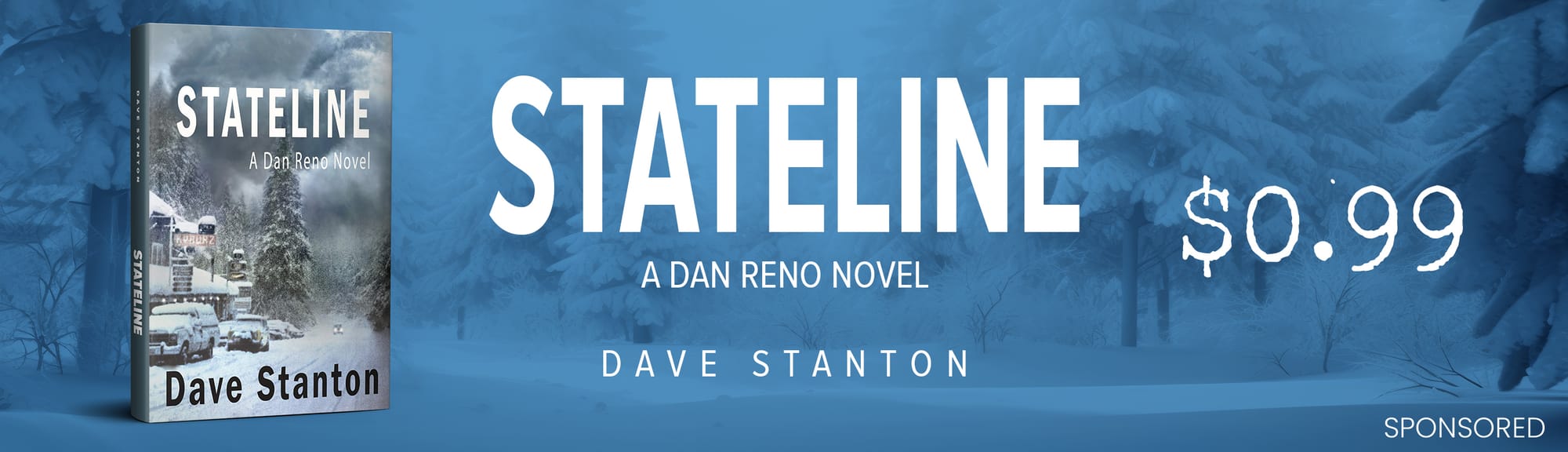
Only Stateline was advertised. Shoppers could browse the other books; a separate group reported beliefs using the static screen below.

At $2.99, checkouts rose from 2.4% with the plain ad to 3.9% with the price ad. At $5.99, the rates were 1.1% and 1.2%, a difference the study could not distinguish from zero.
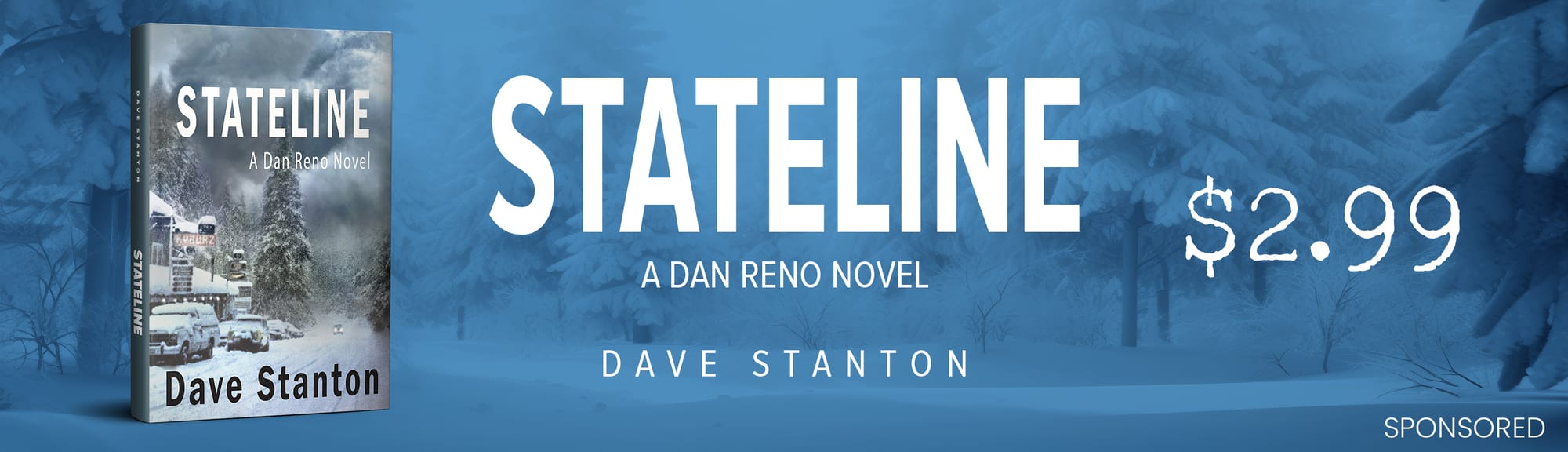
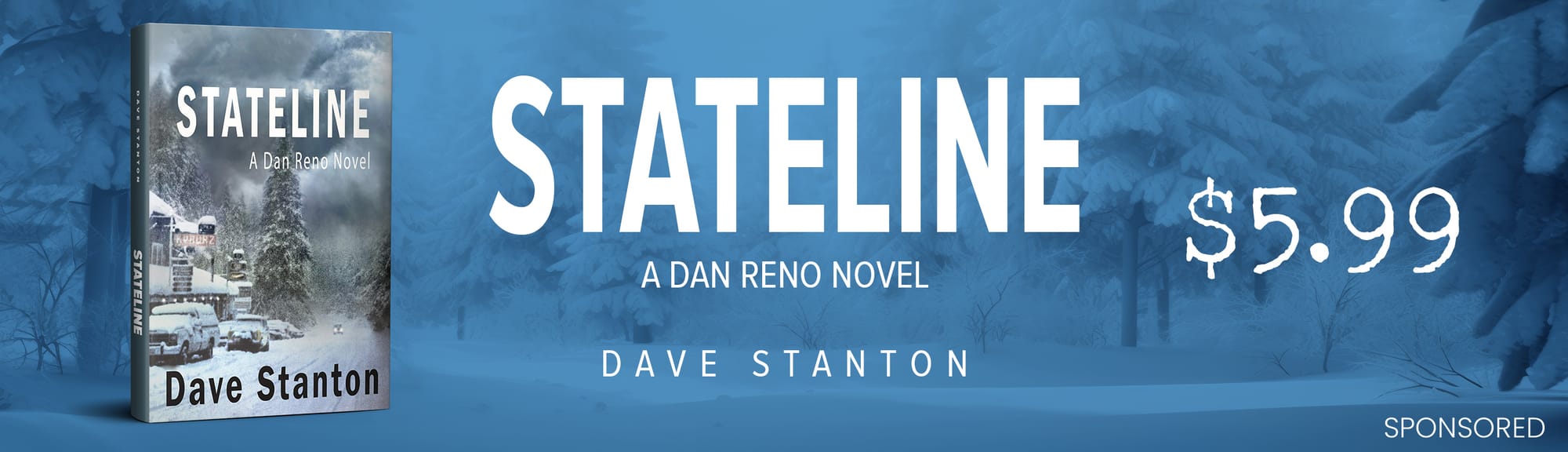
Participants initially had to select one book. They then chose whether a lottery win would deliver that book plus the remaining budget, or all $6 in cash. At $0.99, the stricter outcome—checking out Stateline and choosing to keep it—also favored disclosure: 4.8% → 6.7%. The main model calls store checkouts “purchases”; Appendix C repeats its analysis using the stricter outcome.
A separate group reported beliefs rather than shopping. The bars show the average probabilities assigned by respondents shown the plain ad, including people who did not attend to it. They demonstrate reported possibilities; they are not the fitted attentive-shopper beliefs behind the opening $4.80/4.23 expectations.
Stateline’s experimental rating was 4.2. Rating-only and combined price-and-rating ads were not tested. The $4.50/4.4 comparison belongs to the fitted model, not these banner results. The public synopsis in the main essay illustrates personal fit; it does not establish what any participant read or thought.
Now put the price beside the job
That is the question I want beside an ad and its destination: what could this shopper discover that would change the buying judgment? A sensible refusal to investigate does not tell us what the investigation would have revealed.
Consider one different purchase. Someone has a chrome bathroom fitting to tighten and ordinary pliers in a drawer. Here is the Knipex 86 03 180 pliers wrench with an illustrative $60 offer.
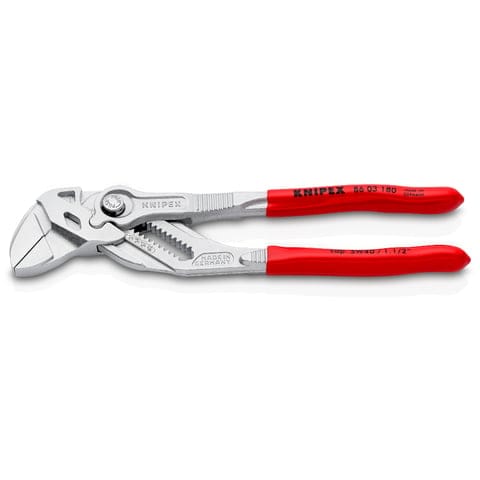
Sixty dollars for another pair of pliers?An imagined shopper’s objection.
Product photograph: Knipex.
Under that description, there may be little worth investigating. Now look at the contact with the fitting.
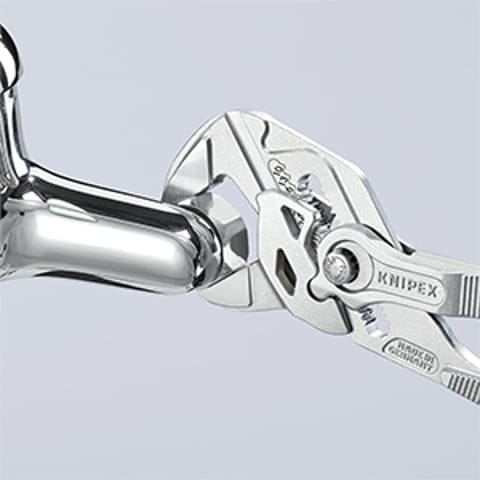
The price is still $60. The job is now more particular: tighten the fitting without chewing up the finish. “I already own pliers” no longer settles it. Those smooth faces give our imagined shopper something useful to consider at the same price.
The book shopper allowed an exceptional discovery; disclosure removed it. The tool shopper had not recognized a useful job; explanation supplied it. Both concern whether looking could change the purchase decision. They point in different directions for the ad.
For this tool, I would explain more:
Smooth jaws for chrome fittings. $60.
Purpose and price belong together here. The shopper can now decide whether protecting that finish is worth considering at $60. Someone with a suitable spanner already in hand may have their answer. So may someone whose budget simply cannot stretch to it.
For another buyer, the next question is more useful: will these jaws get around their fitting? Knipex lists a 40 mm capacity for this model. A page that makes the capacity and contact clear can help the buyer compare the tool with the fitting in front of them. A page repeating “for chrome fittings” leaves that job undone.
Discovering that their fitting is too large would end the sale for a better reason than “just another pair of pliers.” Discovering that an existing spanner will work would do the same. Useful inspection earns a more informed choice, including a well-founded no.
The people who look and leave
The shopper’s freedom to refuse is what made the book’s upside valuable. It is also what makes paying for inspection costly. A visitor can learn exactly what they came to find out and leave us with the click bill.
Same eligible audience, offer and destination. Invented arithmetic, not a forecast. Contribution is after product and fulfillment costs, before advertising. Other costs are held constant.
Four additional kept orders have not paid for the extra visits. If we test showing the price first on the page, keep the offer and destination the same and compare eligible audiences on like terms. The extra contribution from kept orders has to cover the extra advertising. More clicks or proof that people understood the jaws cannot settle that decision.
I would start this sale with the use and the $60 together. Then I would put that ad beside its destination and look for what remains unresolved about those jaws around this buyer’s fitting. That is the learning a further visit would have to buy.
If the page can help answer it, there is a reason to test showing the price there first. If the page only repeats the promise, I would let the price end the visit before it starts.